Survivors to co-produce new standards for life after stroke support
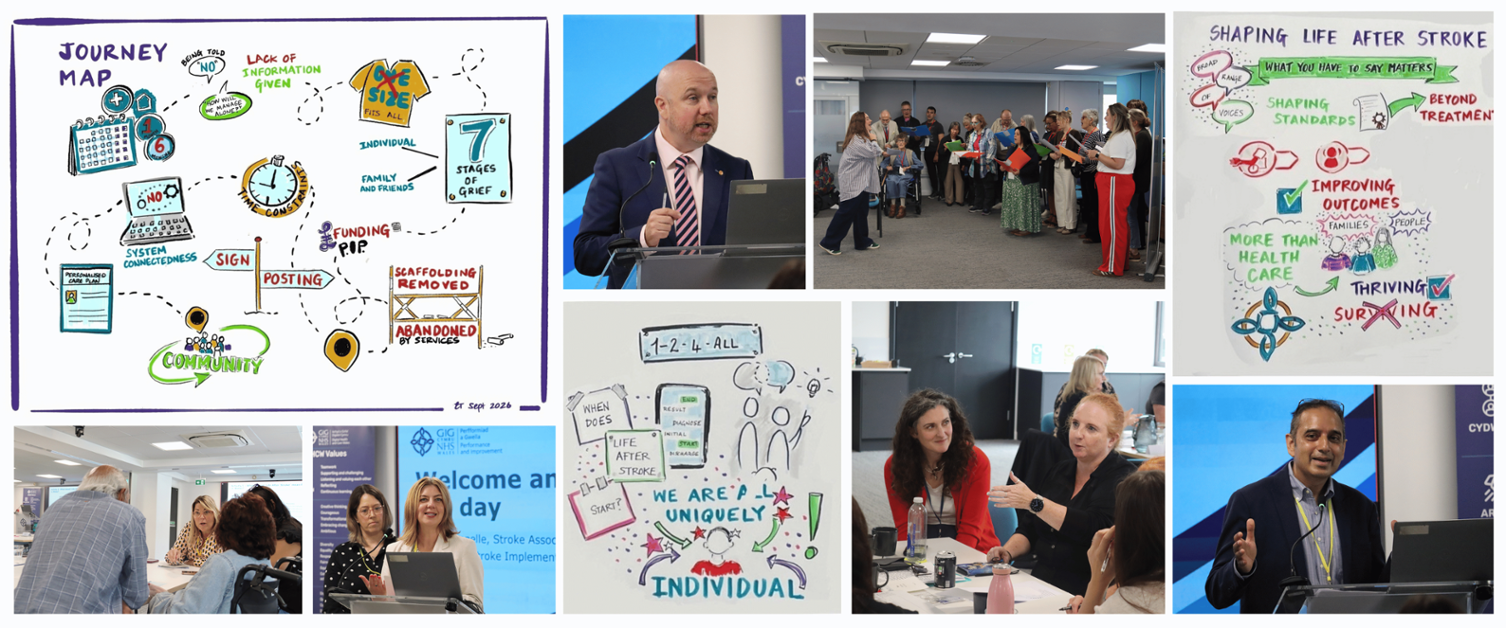
Stroke survivors, their loved ones and carers will be central to the development of new standards for how they should be supported with their recovery.
Co-production of national Life After Stroke Standards has commenced at an event hosted by NHS Wales Performance and Improvement and the Stroke Association.
The standards are being developed following reports from stroke survivors across Wales that they feel unsupported and unprepared for life after stroke.
Cabinet Minister for Health and Social Care, Mabon Ap Gwynfor MS shared personal experience at the event, of both his father and a best friend having had strokes.
The Cabinet Minister said: “For many years, stroke improvement has rightly focused on saving lives, better prevention, faster diagnosis, and access to treatments like thrombolysis and thrombectomy. But surviving a stroke is not the end of the story.”
“For thousands of people across Wales, it is the beginning of a very different journey. A journey that may involve adjusting to physical disability, communication difficulties, fatigue, cognitive challenges, changes in mood, returning to work, rebuilding confidence, navigating relationships, or becoming a carer overnight.
“The purpose of this work is not simply to write standards. The purpose is to create a shared vision for what everybody affected by stroke in Wales should be able to expect, regardless of age, your background, or where you live.
“Together, we have an opportunity to create something meaningful. Something that reflects the needs of people affected by stroke today and supports future generations across Wales.”
An inspiring agenda
The event featured a range of sessions facilitating discussion to identify key life-after-stroke principles important to stroke survivors and their support networks, alongside an inspirational performance by the Stroke of Harmony choir, comprising stroke survivors, carers, loved ones and healthcare professionals.
Individuals shared their experiences of the support they and their families, loved ones and carers have received during their life after stroke. One attendee described the insufficient support they received following their discharge from hospital as “the scaffolding being taken away before the job’s done.”
Nia was a primary school teacher in a Welsh language school and had a stroke at work. Her colleagues immediately stepped in to support her and took her to A&E for emergency care.
The lack of Welsh language provision available to support rehabilitation and adjusting to life after stroke led to Nia experiencing inconsistent support, adding to the already significant challenges she faced during her recovery.
Her family, colleagues and a group of fellow stroke survivors have played a key role in supporting her rehabilitation, particularly through the Welsh language. This has included using materials from her primary school class.
Nia said “Being unable to use Welsh meant I had to work so much harder to understand and engage with the support offered after my stroke.
“My family and colleagues made a huge difference by supporting me in the best way they could but using the materials from school to learn to read again felt embarrassing and really made me realise where I was in my journey.
“Stroke happens to us who survive it, but it’s important to recognise that it also happens to those around us. They also need better support, so they are equipped and confident to support us in our lives after stroke, and don’t feel isolated or alone.
“The group of stroke survivors that I have joined through the Stroke Association has been brilliant, and the new standards should formalise a role for us in supporting stroke survivors in future, because we have been there and know we can help.”
Katie Chapelle, Associate Director of the Stroke Association in Wales, added: “The Life After Stroke event was a pivotal moment for stroke survivors in Wales, whose voices will be heard more clearly than ever before through the co-production of these new standards.
“We are pleased to be working in partnership with NHS Wales, Welsh Government and the broader stroke community on this important development, which will raise the bar for how people are supported after stroke to where it should be.
“Actively engaging with people living their lives after stroke is fundamental to this work. To enable this, we’re currently appointing new Stroke Association colleagues who will be having conversations with people right across the length and breadth of Wales, to ensure that the standards reflect the needs of everyone rebuilding their lives after stroke.”
Improving together
Introducing the National Life After Stroke Standards is one element of improvements being undertaken in line with the Quality Statement for Stroke, published in February.
The quality statement aims to improve quality-of-life outcomes for people at risk of stroke, those who have had a stroke, their carers, family and loved ones, and the stroke workforce. It was developed with individuals who have expertise of stroke through lived experience.
Sustained improvements across the stroke pathway aligned to the quality statement will prevent hundreds of strokes, save lives, and give stroke survivors, their families, and loved ones the best chance to rebuild their lives after a stroke.
Dr Anthony Gibson, Medical Director, NHS Wales Performance and Improvement, said: “The co-production of the new Life After Stroke standards is a prime example of both the work needed to improve stroke care and support, and how we need to go about doing it.
“The experiences that stroke survivors courageously shared throughout the event were stark, powerful and illuminating, which reiterated the importance of both improving the care and support they receive, and including them in designing and delivering those improvements.
“The Quality Statement for Stroke identifies ongoing support after stroke as a key area of focus for us in NHS Wales. The event was an important first step forward, but we must now seize the opportunity to build momentum together and co-produce standards that will make a meaningful difference to the experiences and outcomes of people affected by stroke in the future.”
The new co-produced Life After Stroke standards will be published in 2027. If you would like to contribute to their development, please email NHSPI.StrokeAdmin@wales.nhs.uk.